
Scurvy Post Byline:
Blog post researched and written by Spring 2026 University of Kentucky School of Information Sciences Alternative Spring Break Intern, Tessa Mills. During her week-long internship, Tessa worked with the 1843 volume of the Early School of Medicine Dissertation adding metadata to an internal spreadsheet which will be made accessible for users to more easily use the collection online.
Historical Context Note:
The Health Sciences and Human Services Library Historical Collections’ strives to provide broad access to our diverse collections both in person and digitally. Materials in our collections appear as they originally were published or created and may contain offensive or inappropriate language or images and may be offensive to users. The University of Maryland, Baltimore does not endorse the views expressed in these materials. Materials should be viewed in the context in which they were created.
Rediscovering an 1843 Thesis on Scruvy:

The dangers of nineteenth-century sea travel extended far beyond storms and shipwrecks. For many sailors, the greatest threat was disease, particularly scurvy, a condition that could quietly devastate crews during long voyages. Weakness, bleeding gums, and eventual death were all too common abroad ships that lacked access to fresh food. Although widely recognized, the causes of scurvy were still debated well into the mid-1800s, making it a subject of ongoing medical inquiry.
One such inquiry can be found in the 1843 medical dissertation collection held by the University of Maryland, Baltimore. This volume, now digitized and available through the Health Sciences and Human Services Library (HSHSL), contains a range of student theses reflecting the medical knowledge and concerns of the time. Among them is a dissertation titled Scurvy, written by Augustus J. Bowie.
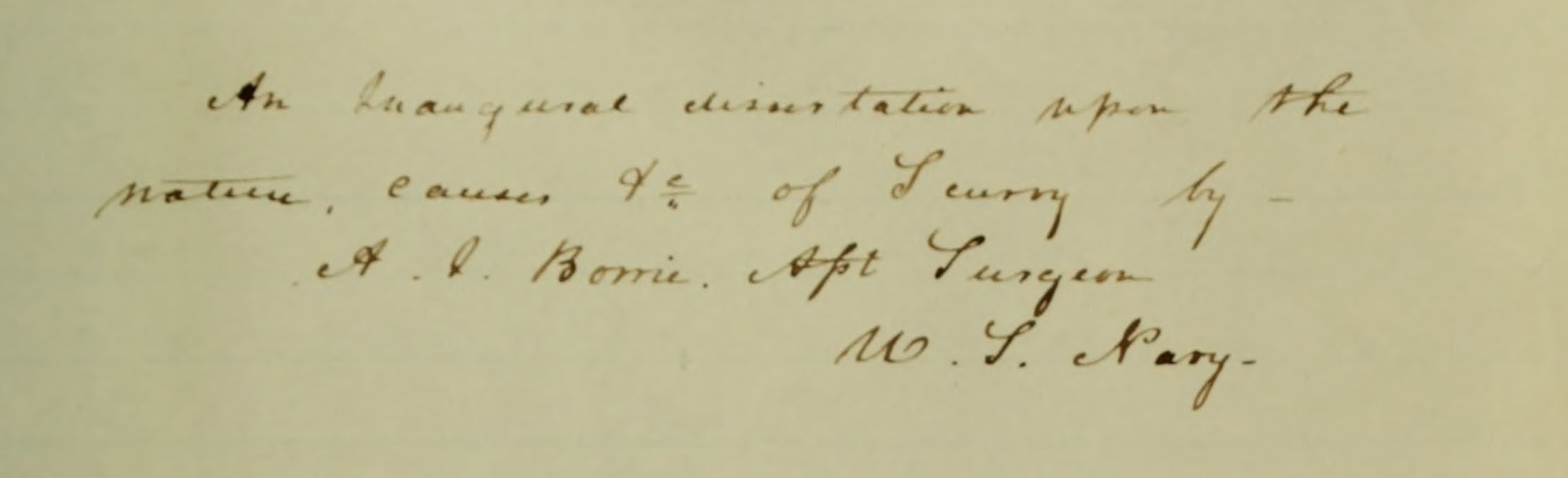
Augustus Jesse Bowie (1815-1887) received his medical degree from the University of Maryland in 1843. At the time of his dissertation, he was already serving as an Assistant Surgeon in the United States Navy, an experience that likely shaped his interest in diseases associated with maritime life. Naval surgeons occupied a critical role in the nineteenth century, observing and treating illnesses under challenging conditions, often far from established medical institutions. For Bowie, Scurvy would not have been an abstract topic, but a very real threat encountered in the course of his service.
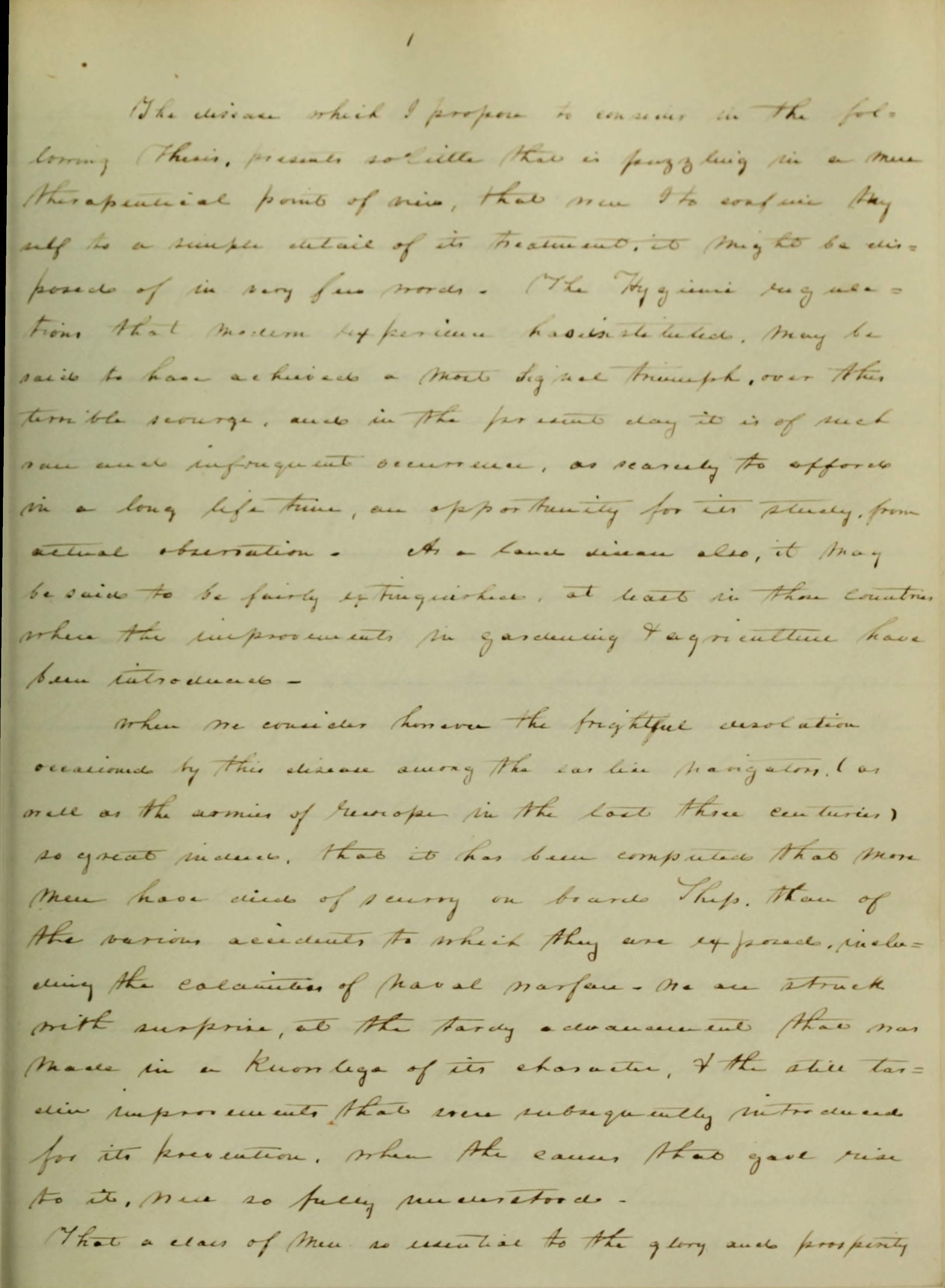 Bowie’s dissertation reflects a moment in medical history when scurvy was well known but not yet fully understood. While the effectiveness of citrus fruits in preventing the disease had been observed decades earlier, the underlying cause (vitamin C deficiency) would not be identified until much later. In the early nineteenth century, physicians still debated competing theories, attributing scurvy to environmental conditions, diet, or imbalances within the body. Treatments varied widely, and medical consensus remained elusive.
The inclusion of Bowie’s work in the 1843 dissertation collection offer valuable insight into how emerging physicians engaged with these uncertainties. His thesis represents not only a requirement for earning a medical degree, but also a contribution to a broader effort to understand and manage a persistent and deadly condition.
Following his early career in the Navy, Bowie later settled in San Francisco, where he became an established and respected physician. His professional contributions were significant enough to be recognized in a published memorial after his death, indicating the lasting impact of his medical career. Seen in this light, his dissertation on scurvy marks the beginning of a lifetime dedicated to the practice of medicine.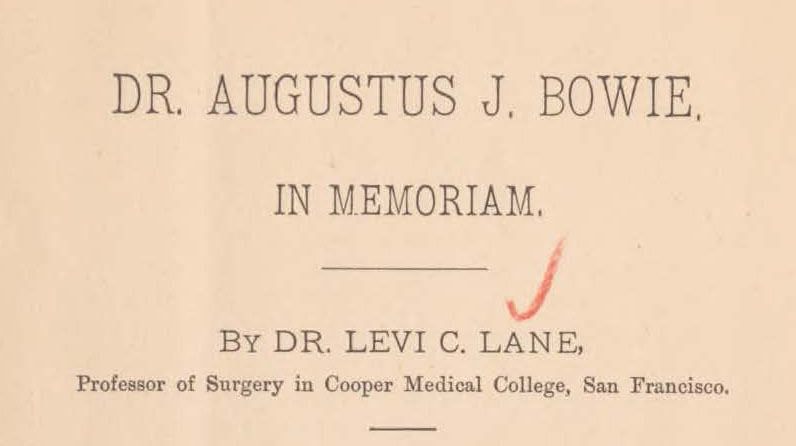
Today, the digitization of these early dissertations allows researchers, students, and the public to revisit these historical perspectives. What was once a bound volume accessible only in person is now searchable and available online, opening new opportunities for discovery and interpretation. Bowie’s thesis, like many others in the collection, serves as a reminder that medical knowledge is continually evolving; shaped by observation, experience, and the gradual accumulation of understanding.
By preserving and sharing these works, the HSHSL digital collections not only safeguard the past but also invite new conversations about the history of medicine and the individuals who contributed to it.
Check out more historical resources and UMB research go to the UMB Digital archive.
References:
- Bowie, Augustus J. (1843). University of Maryland Medical Dissertation. p. 483. HSHSL Digital Archive. https://archive.org/details/universityofmary43unse/page/n481/mode/2up
- Health Science and Human Services Library. “Dissertations, 1843 Collection.” University of Maryland, Baltimore. https://archive.hshsl.umaryland.edu/collections/24a5243d-830d-4939-a929-90425ad3309b
- National Library of Medicine. Dr. Augustus J. Bowie: In Memoriam. NLM Unique ID:101728202. https://collections.nlm.nih.gov/catalog/nlm:nlmuid-101728202-bk
- Carpenter, Kenneth J. (2004). “The History of Scurvy and Vitamin C.” Journal of the Royal Society of Medicine. https://pmc.ncbi.nlm.nih.gov/articles/PMC535077/
- Alan, Robert. (1959). “James Lind–Conqueror of Scruvy.” Parke, Davis & Company. Wiki Commons. https://commons.wikimedia.org/wiki/File:James_Lind-conqueror_of_scurvy.jpg


 Over the coming weeks, the HSHSL team will be conducting a weeding and shifting project on the fifth floor. This work is part of our ongoing effort to refresh the physical collection, ensure materials remain relevant, and make it easier for users to navigate the stacks.