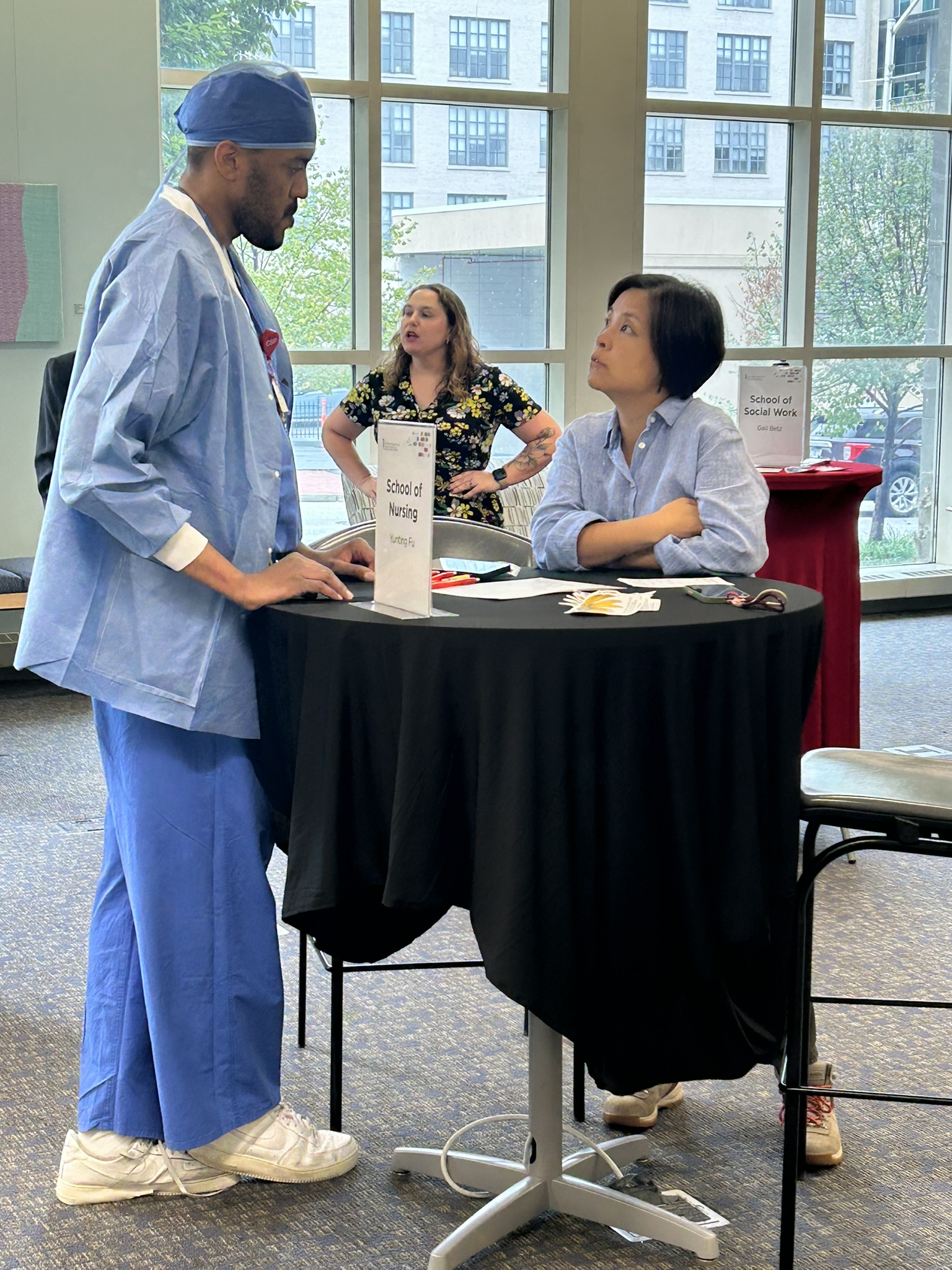
Did you know that each school at UMB has a dedicated librarian? Getting to know your librarian is one of the easiest ways to make your research process smoother.
Your liaison librarian can help with:
Research and database searching
Finding and evaluating sources
Systematic reviews and advanced literature searches
Citation questions and reference management tools
They also work closely with your program and understand the resources and assignments specific to your field.
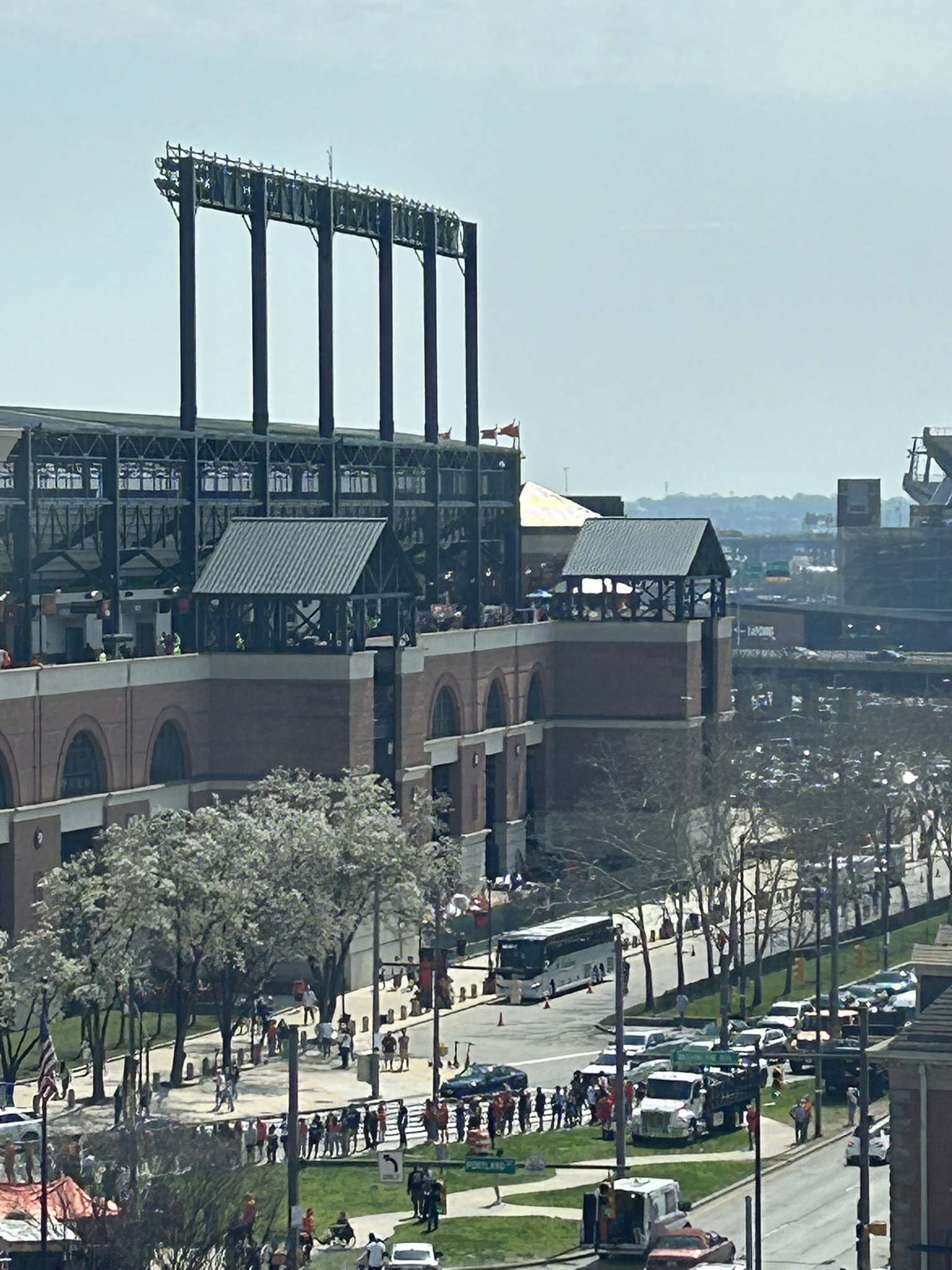
If you’re hearing music, cheering, or a general festive rumble, it’s not your imagination. It’s Opening Day for the Baltimore Orioles, and the sound is making its way into the building.
We love it, sure, but we know you might not love it for studying.
March 24, 2026 Update: The access issues affecting Embase appear to be resolved. If you continue to experience problems, please let us know so we can investigate.
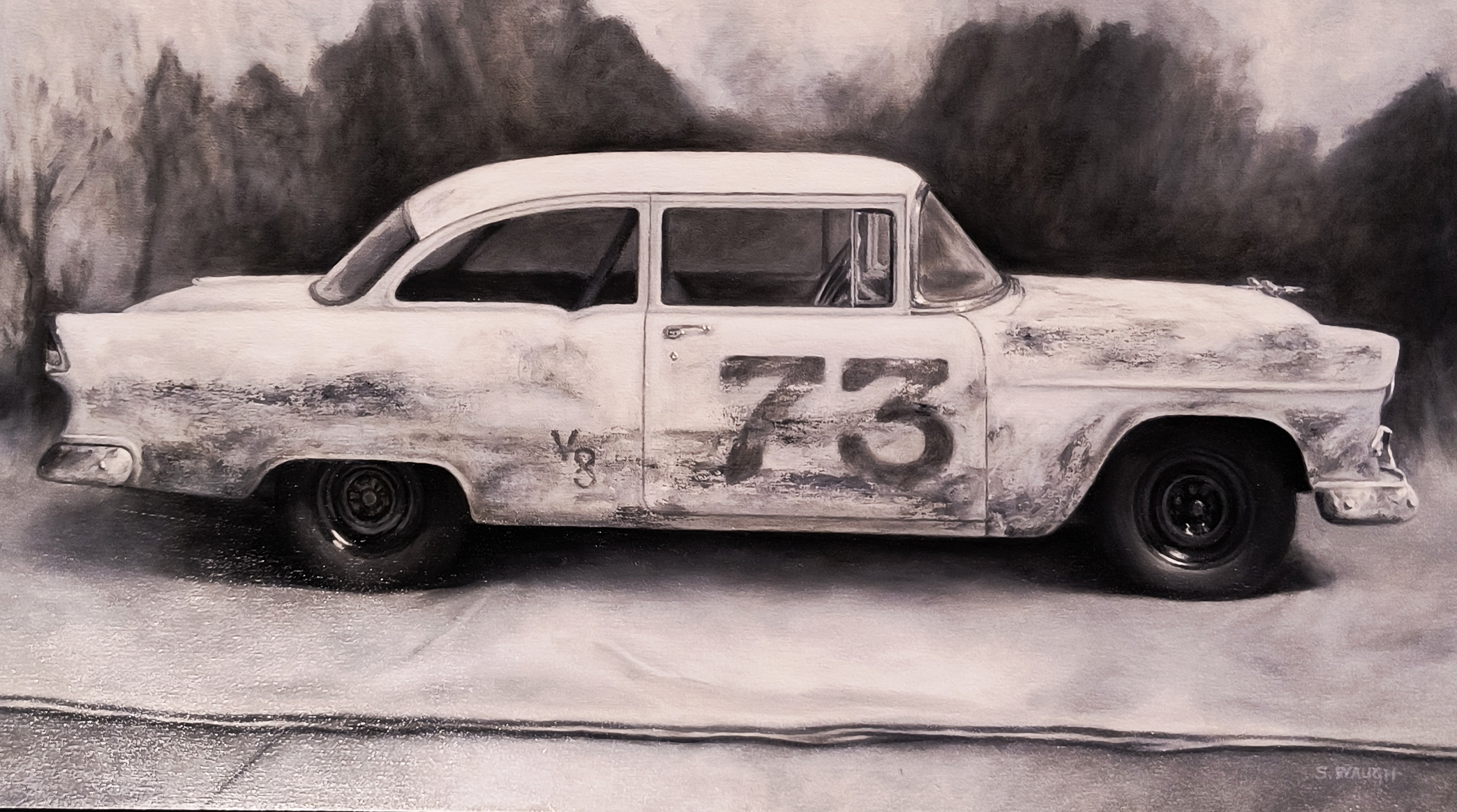
Waugh, a self-taught Baltimore painter, creates photorealistic black-and-white oil paintings. His recent work explores themes of light and shadow through subjects such as nature, classic cars and portraits of 1920s film stars.
The library will host a reception in May 2026. Details will be announced soon.
The University of Maryland, Baltimore community has access to Academic Video Online (AVON), a large streaming video collection of educational films, documentaries, interviews, and performances. The database includes more than 85,000 streaming titles that support teaching, learning, and research across many disciplines.
Ways to Use AVON
Find a documentary for a class presentation
Watch interviews with experts on health policy or public health
Explore historical footage related to medicine and health care
Discover educational films that support course topics
What You Can Find
AVON includes titles from respected educational and documentary producers. Topics relevant to UMB programs include:
Public health and health policy
Counseling and psychology
Rehabilitation therapy
Nursing and clinical practice
Social determinants of health
Science and medicine
The collection also includes historical footage, interviews with researchers and clinicians, and documentaries on social and cultural issues related to health care.
Helpful Tools for Teaching and Learning
AVON includes tools that make it easy to use video in coursework.
For help getting started, including tips on creating clips, playlists, and embedding videos in Blackboard, visit the AVON subject guide. If you have questions or need support, contact Information Services at hshsl@umaryland.edu or 410-706-7995.
Access to Academic Video Online is provided through the University System of Maryland and Affiliated Institutions (USMAI) library consortium.
Curious about AI tools for finding and summarizing research? Join us virtually for a 30-minute introduction to Consensus, an AI-powered search engine that synthesizes peer-reviewed literature to highlight areas of agreement and disagreement in the evidence. Explore our Consensus LibGuide for guidance and examples (opens in a new window).
In this session, you will learn:
How Consensus works and what it searches
When it can save you time exploring the evidence on a topic
Its strengths and limitations
How it compares to traditional databases and other AI tools
Consensus is a powerful accelerator, but it does not replace systematic searching. Join us to learn how to use it responsibly and effectively.
Enhancing Patient Outcomes Through Clear Health Communication
Are you aware of your patients’ ability to understand and act on the information you give them? Evidence shows that health care providers often overestimate what patients understand. Low health literacy is linked to higher mortality, increased hospitalization and readmission, and poor self-management of chronic disease. This workshop covers the basics of health literacy and clear communication, including practical tools to help you create easy-to-read materials.
Tuesday, March 17, 1-2:30 p.m. Thursday, April 30, 9-10:30 a.m.
Health Information Resources for Culturally Diverse Patients
Want to improve communication with patients whose native language is not English? In this workshop, you will explore patient education resources, including medical information available in multiple languages. The session also examines how using these resources can improve patient compliance and health outcomes.
Tuesday, March 24, 10-11:15 a.m. Tuesday, April 21, 1-2:15 p.m.
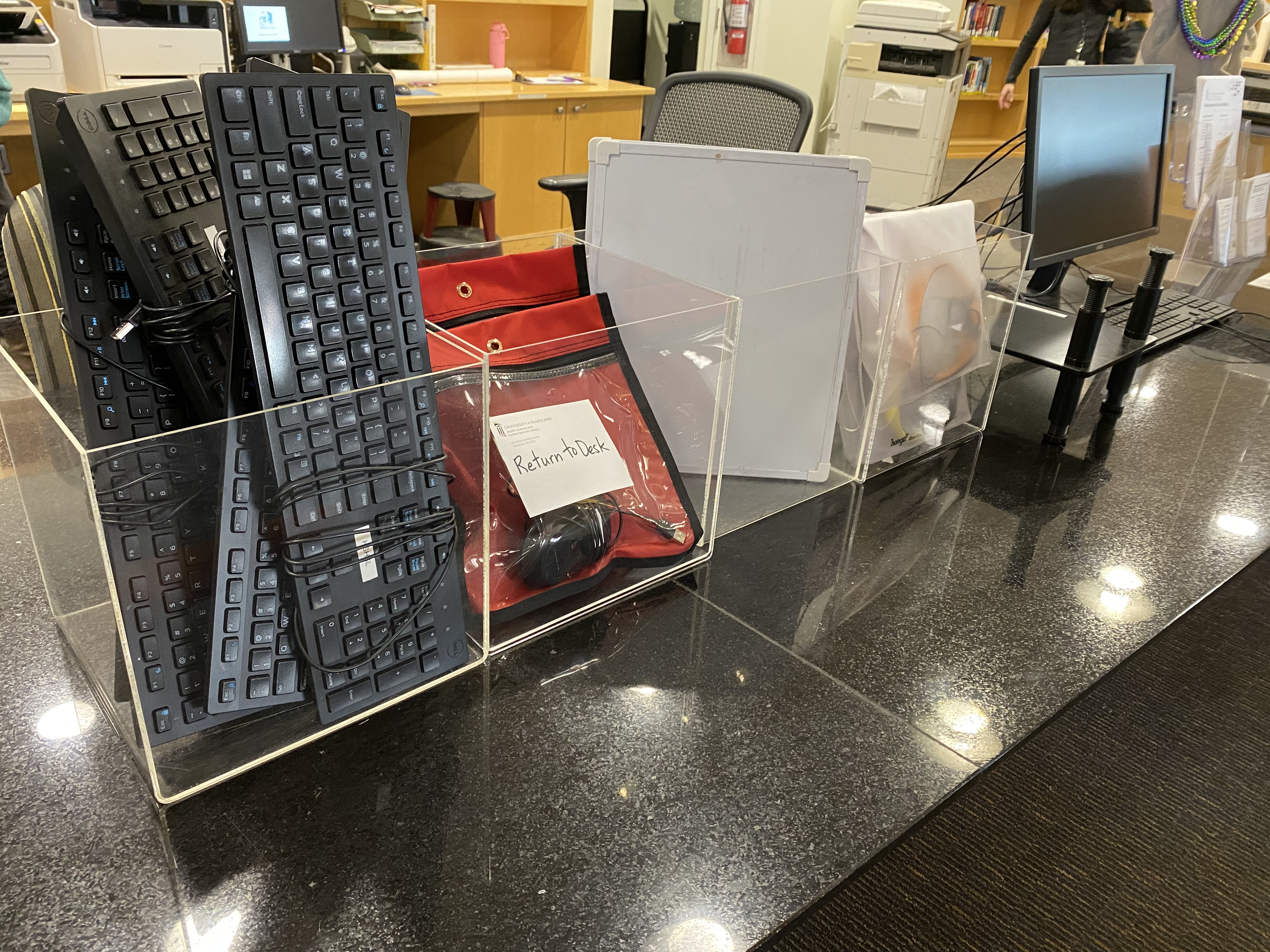
Need a keyboard, mouse or headphones while you study at the HSHSL? The library now offers USB keyboards, mice and headphones for grab-and-go use at the service desk.
You can continue to borrow mini whiteboards, standard headphones and adjustable stands.
No checkout required. Take what you need and return it to the desk before you leave.
Questions? Ask us at the desk. We are happy to help.
The Library building will be closed from 6 p.m. Sunday, Feb. 22 through Monday, Feb. 23 due to inclement weather.
While our building is closed, our online services remain open. You can access databases, ebooks, journals, streaming media, and research guides through our website with your University credentials.
Most library staff will be working remotely during regular weekday hours while the building is closed. If you need research help or have questions, email hshsl@umaryland.edu and someone will respond as soon as possible.
Stay safe, stay warm, and we look forward to seeing you when we reopen.
Posted inUncategorized|Comments Off on Library Building Closure Due to Inclement Weather
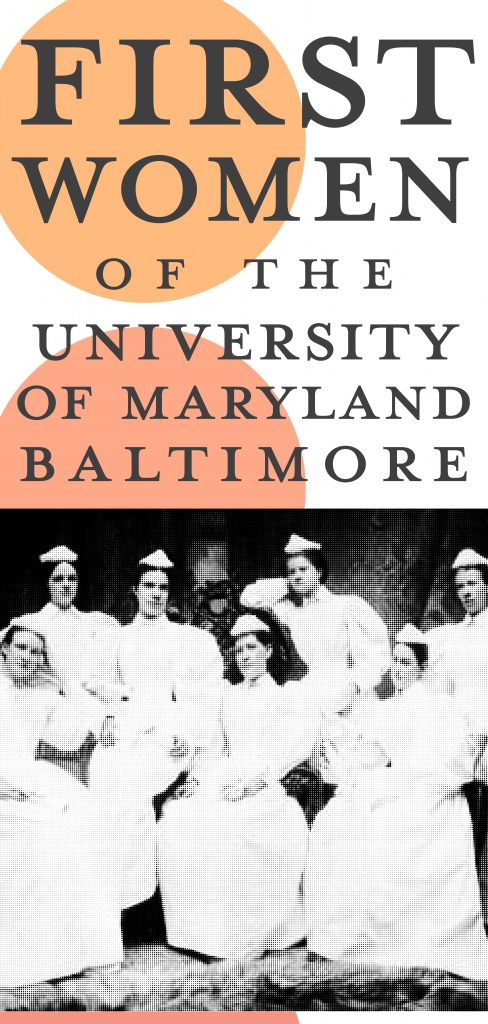
March is Women’s History Month, the HSHSL will celebrate the month by honoring select UMB women through an exhibit, The First Women of the University of Maryland, Baltimore, in the Weise Gallery. The exhibit first debuted in March 2020 and was reinstalled in March 2022; this marks the third time the HSHSL honors the 150-years of Women’s History at UMB.
The University of Maryland, Baltimore (UMB), first founded as the College of Medicine of Maryland in 1807, has seen several mergers with other Baltimore area Colleges and Universities and a term as a branch campus of the University of Maryland, College Park from 1920 to 1970. The history of women at UMB is intermingled with the histories of these Baltimore schools. Women’s history at UMB, was challenging; the first women fought hard to earn a spot as students, faculty, and staff. The women faced tremendous sexism, criticism, and discrimination but nevertheless they preserved and helped create a safer and more welcoming space for women at UMB.
The exhibit highlights the brief stories of eleven of these firsts: Dr. Emilie Foeking, Louisa Parsons, Dr. Lady Mary Johnson, Ruth Lee Briscoe, Dr. B. Olive Cole, Dr. Teresa Ora Snaith, Esther E. McCready, Dr. Ruth H. Young, Dr. Barbara C. Hansen, Alice Cary, and Dr. Natalie D. Eddington.
The exhibit will be in the Weise Gallery from February 20 to March 20, 2026.



 March is Women’s History Month, the HSHSL will celebrate the month by honoring select UMB women through an exhibit,