
The Health Sciences and Human Services Library Historical Collections’ strives to provide broad access to our diverse collections both in person and digitally. Materials in our collections appear as they originally were published or created and may contain offensive or inappropriate language or images and may be offensive to users. The University of Maryland, Baltimore does not endorse the views expressed in these materials. Materials should be viewed in the context in which they were created.
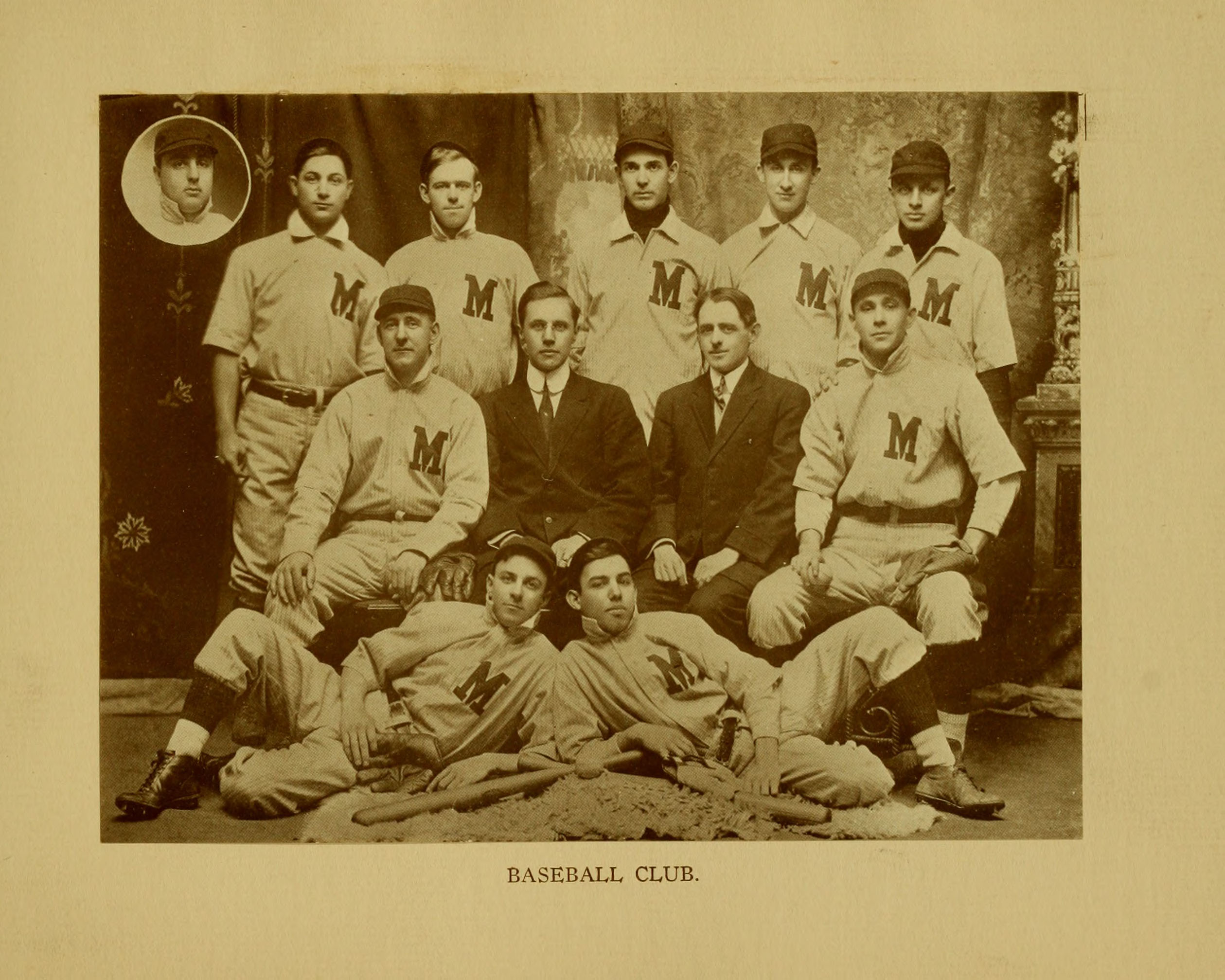
In celebration of the Oriole’s 2021 opening day, let’s take a look back at some of UMB’s major leaguers: John Francis Hayden, Robert Baker Lawson, Archibald Wright Graham, and John Frederick Anderson. From 1901 to 1918, four UMB graduates appeared in major league baseball games, including the World Series! The players graduated from the Schools of Dentistry and Medicine with the Classes of 1902, 1905, and 1909.
The four MLB Players from UMB also starred on the University’s Baseball team, which formed in the late 1890s and played the Baltimore Orioles in exhibition games in 1898 and 1899. Sports teams at UMB lasted until the early twenty-first century when grueling coursework and the lack of support from the faculty prevented students from showcasing their athletic abilities. The following post reflects the skills of some of UMB’s athletes, many of which returned to the medical field after playing professional ball.
John “Jack” Francis Hayden, School of Dentistry, Class of 1902, 1880-1942
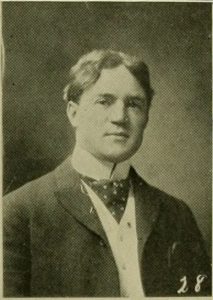 John Francis “Jack” Hayden was born on October 21, 1880 in Bryn Mawr, Pennsylvania. He attended Villanova University and the University of Pennsylvania Medical and Dental Schools (1897-1900) before graduating from the University of Maryland School of Dentistry in 1902. While at Villanova and the University of Maryland, Hayden played both baseball and football.
However, while a student, Hayden also played in professional and semi-professional football and baseball leagues. By 1901, he signed his first major league contract with the Indianapolis Hoosiers of the American League. That same year he signed with the Philadelphia Athletics—then a new major league team—playing his first game April 26, 1901. He played right field and was the leadoff hitter against the Washington Senators.
 In June 1903, Hayden signed with the Baltimore Orioles; his first game with the Orioles occurred on June 10, 1903, where he turned heads with his hitting, scoring two runs in the 7 to 3 win against Providence. Hayden remained with the Orioles until 1905, when he illegally signed with a York team in the Tri-State (minor) League. As a result he was blacklisted by the National Commission, preventing him from playing with another major league baseball team. In 1906 he was removed from the blacklist and signed with the Boston Americans. That same year he was involved in an altercation with his teammate Hobe Ferris; Ferris was suspended by the American League for kicking Hayden in the face. Hayden fell out of favor with the team because of lackadaisical play and was traded to Rochester in 1907. From 1908 to 1910, Hayden played for the Indianapolis Indians. In 1911 he sighned with the Louisville Colonels, where a dislocated shoulder in June 1912 ended his playing career. He remained with the Louisville team as manager until 1915.
Hayden also played professional football. In 1902 he played quarterback in the National Football League with the Philadelphia Athletics, and from 1903 to 1905 Hayden played for the Franklin Athletic Club, the Cleveland Massillon Tigers, and the Canton Bulldogs.
While Hayden received his dental degree, he never entered the dentistry practice, choosing instead to return to Bryn Mawr, PA after his baseball career to run a meat and provisions business. He married Herminnie Jadot in 1913 and died from coronary thrombosis on August 3, 1942.
Robert Baker “Bob” Lawson School of Medicine, Class of 1902, 1875-1952
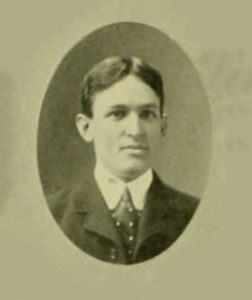 Robert Baker Lawson was a School of Medicine classmate of Dr. Hayden; while, there is no proof the two probably played football and baseball together for UMB. Dr. Lawson was from Lynchburg, Virginia. He attended and graduated from the University of North Carolina (UNC), Chapel Hill, where he played baseball, football, and ran track. While at UNC he held a 35 to 1 record as a pitcher.
Dr. Lawson’s first major league game was played May 7, 1901 with the Boston Beaneaters, where he played for three games before signing with the Baltimore Orioles in May 1902. Lawson’s first game for the Orioles occurred May 31, 1902; he came into the game as a relief pitcher and gave away six runs. The Orioles lost six to three to Cleveland. Lawson played three more games as an Oriole before returning to Rhode Island where he played in the minor leagues.
Lawson’s time as a professional baseball player was short lived; he joined UNC as a faculty member in 1905. During his 43 years at UNC, he served as head baseball coach (1900, 1905-1906, and 1910) as well as coached football, track, and gymnastics. He was also the school’s first athletic director and trainer and taught in the School of Medicine. In 1906, Dr. Lawson is credited with introducing UNC—arguably one of the best NCAA basketball school’s today—to the game of basketball during physical education classes. In 1911, und the petition of UNC student, Marvin Ritch, Basketball became a formal team sport at UNC.
Dr. Lawson married Estelle Adlaide Ward Lawson (died in 1949). Together they had a daughter, Estelle Lawson Page. Page became an amateur golf champion in 1932. Dr. Lawson passed away October 28, 1952.
Archibald Wright “Moonlight” Graham, School of Medicine, Class of 1905, 1876-1965
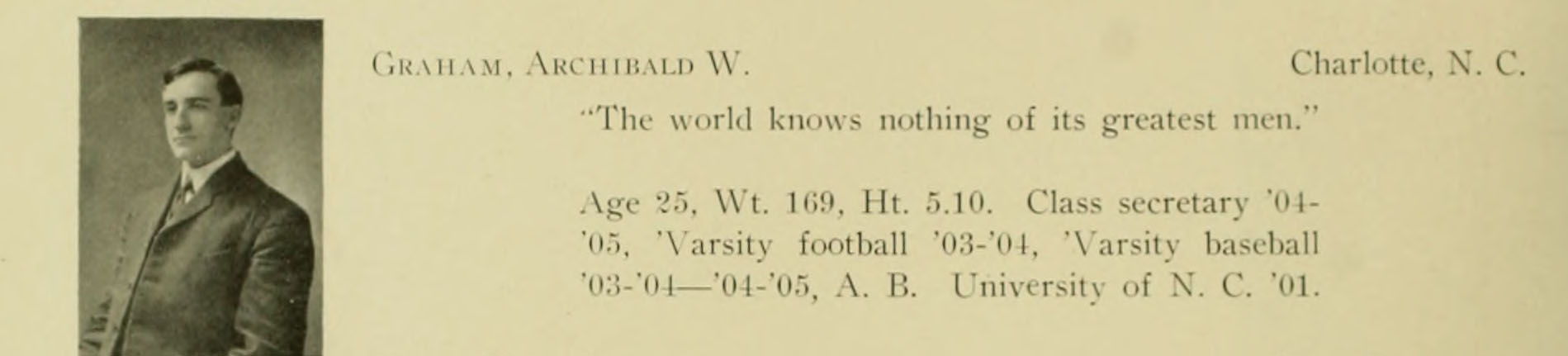
Dr. Archibald Wright Graham or “Moonlight” Graham is the most famous Major League Baseball Player to graduate from the University of Maryland. His story was the inspiration for Doc Graham in Shoeless Joe, a novel by W.P. Kinsella, and in the major motion picture, “Field of Dreams.”
Dr. Graham was born to a large, well-educated family in Fayetteville, North Carolina. Both his parents and his nine siblings were college graduates. Graham, like Dr. Lawson, earned his bachelor’s degree from the University of North Carolina, graduating in 1901. It is possible that Lawson’s and Graham’s paths crossed at UNC, as Graham played both Football and Baseball there. In the Fall of 1901, Graham began a two-year postgraduate medical course at the UNC, School of Medicine.
When not in school, Graham played baseball, signing with the Charlotte Hornets of the North Carolina League in June 1902. Later he signed with Manchester of the New England League, playing there in the summers while continuing his medical education at the University of Maryland, School of Medicine. While at UMB, Graham played on the school’s baseball and football teams.
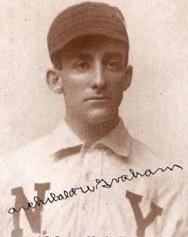 After graduating from UMB, Dr. Graham took an assistant resident physician position at Bayview Hospital and signed with the New York Giants, playing with their minor league affiliate. Dr. Graham’s first and only major league game appearance occurred on June 29, 1905. The Giants were playing the Brooklyn Superbas; Graham entered the game in the ninth inning. He reportedly never touched the ball and was “on deck” when the third out occurred to end the game. The Giants won the game 11 to 1. Graham—except for a brief stint with the Memphis Egyptians in 1906— continued to play minor league baseball with the Scranton Miners until 1908. He also continued studying and practicing medicine in New York and Pennsylvania.
In 1909, he retired from baseball and moved to Chisolm, Minnesota, reportedly in search of relief from respiratory problems. In Chisolm, he set up a family practice and became a beloved figure in the town. He married Alecia Flowers on September 15, 1915. In 1917 he became the physician for the Chisholm City Schools as well as the Chisolm High School sports’ team doctor. Dr. Graham also became a well-known researcher in the field of hypertension in children. He retired from work in 1960 and died in 1965.
John Frederick “Fred” Anderson, School of Dentistry, Class of 1909, 1885-1957
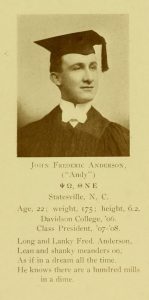 UMB’s final Major Leaguer was John Frederick Anderson from Calahan, North Carolina. Anderson attended Oak Ridge Military Institute and Davidson College before attending the University of Maryland, School of Dentistry. In his final year at UMB, he pitched for the University’s Baseball Team, reportedly setting the strikeout record. The 1909 April-May Old Maryland had this to say about him after a game with the Midshipmen: “Anderson certainly pitched peerless ball, making an exceptional record against the Navy in fanning twenty batters. His record for three consecutive games was fifty-three strikeouts in twenty-four innings of actual play, something practically unparalleled in the history of college baseball.” Anderson graduated from the School of Dentistry in 1909.
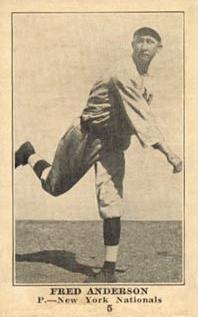 Dr. Anderson pitched for Wilson of the Eastern Carolina League and the Worchester Busters of the New England League before joining the Boston Red Sox in 1909. His first game for the Red Sox occurred on September 25, 1909 where the team beat the St. Louis Browns. After the 1909 season, Dr. Anderson left baseball to practice dentistry in North Carolina. He returned to the Red Sox in 1912 but did not make the team; instead he played with the Brockton Shoemakers of the Colonial League. In August 1913 he again returned to the Red Sox but had a series of disappointing games resulting in him leaving the team in 1914 for the Buffalo Blues of the Federal League. After the collapse of the Federal League in 1915, Anderson returned to the majors with the New York Giants. In 1917, Anderson was still with the NY Giants when they went to the World Series, losing to the Chicago White Sox.
Following the shortened 1918 baseball season caused by World War I, Dr. Anderson joined the U.S. Army Dental Corps. When the War ended in November 1918, Anderson returned to dentistry and set up practice in North Carolina. He married Clementine Tise on June 28, 1921. He retired from dentistry in 1948 and after a two-year illness committed suicide on November 8, 1957.
References and Additional Reading
HSHSL Historical Collections:
- 1902 Bones, Molars, and Briefs Yearbook
- 1905 Terra Mariae Yearbook
- 1909 Terra Mariae Yearbook
- 1909-1910 Old Maryland Newsletter
- 1905-1906 Old Maryland Newsletter
Web Sources:
- Society for American Baseball Research
- Find-a-Grave
- “Field of Dreams: The Origin of University of Maryland Athletics.” Bulletin of the Medical Alumni Association. Spring 2017: https://www.medicalalumni.org/bulletin/spring_2007/lead3.html.
- Ferenchick, M. (May 26, 2017). “The first ever UNC Major League Baseball player, and his role in basketball history.” SB Nation: Tar Heel Blog. Available at: https://www.tarheelblog.com/2017/5/26/15694936/north-carolina-tar-heels-history-baseball-bob-lawson-basketball
“John Francis Hayden.” Penn People: Penn University Archives and Records Center. Available at: https://archives.upenn.edu/exhibits/penn-people/biography/john-francis-hayden

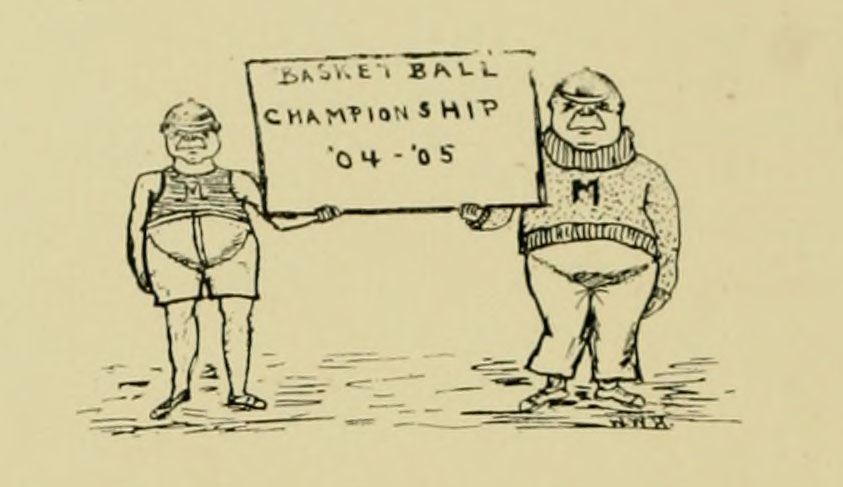
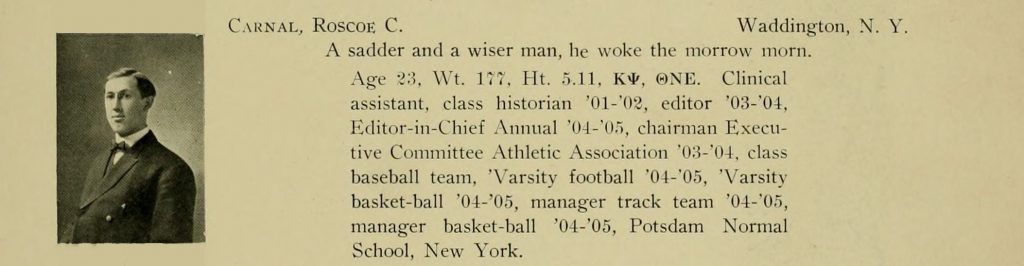
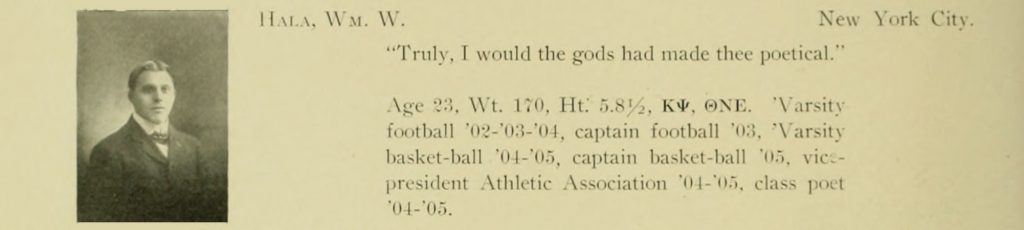
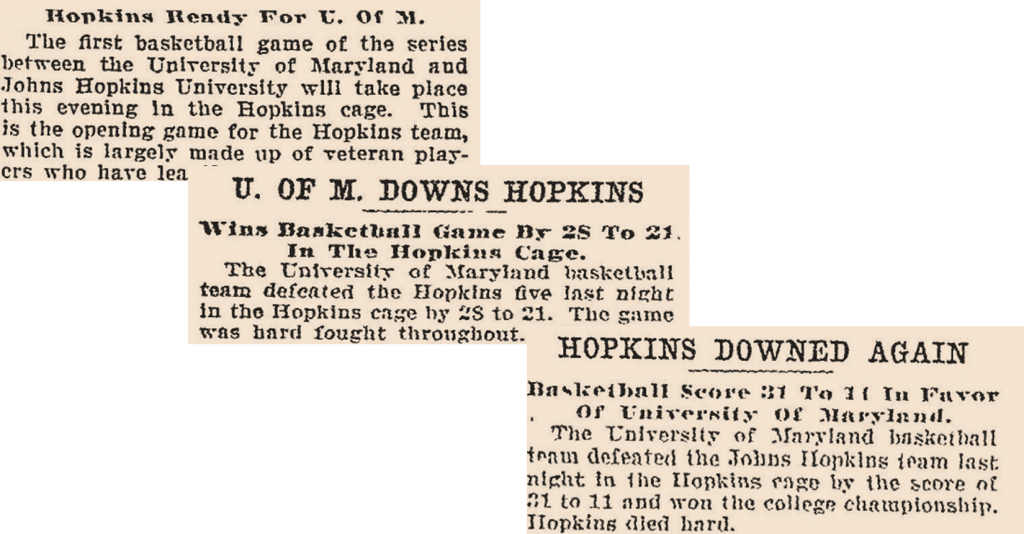 The second game in the Maryland State Championship series versus Hopkins was played February 22, 1905. In this game the University of Maryland team prevailed by a score of 28 to 21 setting the stage for the third and final meeting. On March 2, 1905, the final game was played. With a score of 31 to 11, UMB took the State Championship in its first year of existence!
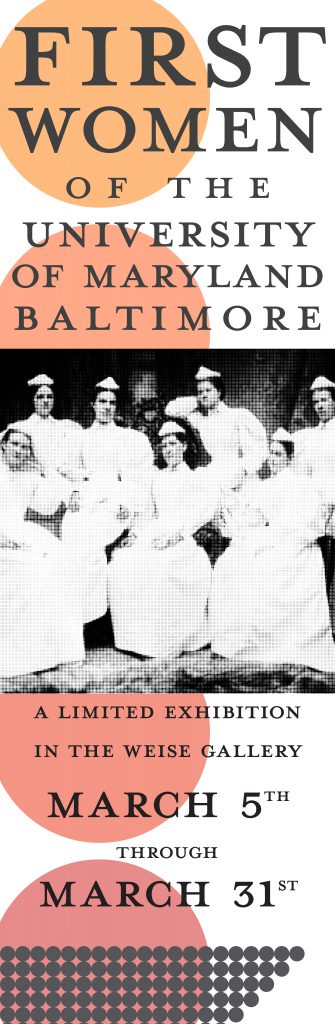 The Health Sciences and Human Services Library Historical Collections’ strives to provide broad access to our diverse collections both in person and digitally. Materials in our collections appear as they originally were published or created and may contain offensive or inappropriate language or images and may be offensive to users. The University of Maryland, Baltimore does not endorse the views expressed in these materials. Materials should be viewed in the context in which they were created.
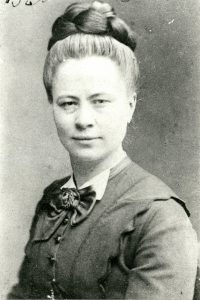 Dr. Emilie Foeking was the first woman to graduate from the Baltimore College of Dental Surgery in February 1873. Dr. Foeking was from Danzig, Prussia; she entered the United States to receive a dental education after being refused one in her home country. Dr. Foeking was rejected by the Pennsylvania College of Dental Surgery and with the help of Dr. James Trumen and Dean Ferdinand J.S. Gorgas entered the Baltimore College of Dental Surgery. She was the first woman to receive a degree in any medical field at the University of Maryland or its predecessors and in Maryland. Her thesis, “Is Woman Adapted to the Dental Profession?” was published in April 1973 in the American Journal of Dental Sciences. Following graduation she returned to Europe and practiced dentistry in Germany.
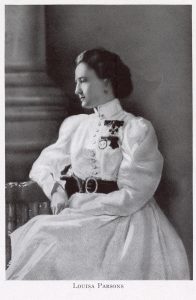 Louisa Parsons was the first Superintendent of the University Hospital Training School for Nurses, a predecessor of the School of Nursing. The School opened under Parsons’ leadership in December 1889. In April 1889, Parsons came to Baltimore as second in command to Isabel Hampton at Johns Hopkins’ Nurses training school, a job she held for six months after which she came to the University Hospital Training School for Nurses. As superintendent, she oversaw the two-year nursing curriculum, introduced the “Flossie” nursing cap, and opened nursing quarters for the students. Parsons served as superintendent until 1892 when she left Baltimore to pursue other nursing positions. At the time of her death in 1916, Parsons had served as a nurse in three wars, two military expeditions, and other volunteer health organizations and received five medals of honor for her work. She was an 1880 graduate of the [Florence] Nightingale Training School for Nurses at the St. Thomas Hospital in London. In 1922, the Louisa Parsons Home for Nurses opened on West Lombard Street in honor of her leadership.
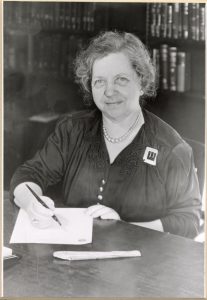 After the sudden death of Dr. Eugene F. Cordell, the first librarian at the University of Maryland, Ruth Lee Briscoe was hired to replace him. Joining the University in 1914, she was the first professionally trained librarian; she oversaw the Medical Library for the entirety of her career but also served intermittently as librarian for the Law, Pharmacy, Dentistry, and Commerce schools. Briscoe was well liked by students, faculty, administration, and staff; she grew the library collections and opened the materials up for student and faculty use. As the collections expanded and student enrollment grew, she oversaw several renovations of the library. Briscoe retired in 1946 and was named Medical Librarian Emeritus in honor of her accomplishments and service to the University. Briscoe passed away in 1955.
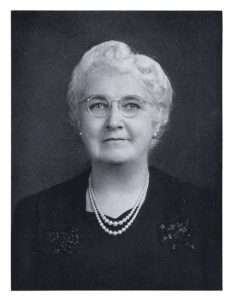 Known as the “First Lady of Maryland Pharmacy”, Dr. B. Olive Cole was a force in the University of Maryland community. Dr. Cole’s distinguished accomplishments included becoming one of the first women graduates of the School of Pharmacy in 1913, one of the first woman awarded a law degree from the University of Maryland School of Law in 1923, the first woman to hold a full professorship at the School of Pharmacy and the first woman appointed to Acting Dean of the School of Pharmacy in 1948. It is believed that she may have been the first woman to hold a full professorship at any school of pharmacy in the United States. She initially gained interest in pharmaceuticals as a stenographer for a prominent Baltimore drug manufacturer – an interest that led to earning the degree of Doctor of Pharmacy. Though she never practiced law officially, she made pharmacy law her specialty after earning her law degree.
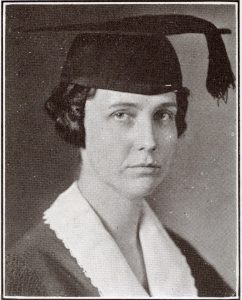 The University of Maryland School of Medicine opened its doors to women in 1918; five years later the first woman graduate, Dr. Theresa Ora Snaith, received her medical degree. She was one of two women in the class of 1923 but the only one to graduate that year. The 1923 Terra Mariae yearbook editor remembered by saying, “I am sure we all agree that she has not detracted from the prestige of our Alma Mater.” A far cry from extolling the accomplishments of the first woman graduate. Following graduation, Dr. Snaith completed her residency at the University Hospital in Baltimore and later returned to her hometown of Weston, West Virginia to set up private practice. In Weston, she was the first woman physician and was well-respected, liked, and remembered in the small town. Dr. Snaith passed away in 1961 from leukemia.
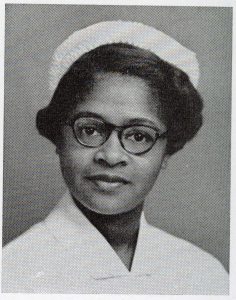 In 1950, Esther Elizabeth McCready became the first black woman admitted to the University of Maryland School of Nursing. After being denied admission to the University in 1949, McCready sued on the grounds of discrimination. She lost her first case but, being determined to attend UMAB, McCready enlisted the help of the NAACP and Thurgood Marshall, who was just a young attorney at the time. They appealed her case and over a year later, the initial ruling was overturned because she was fully qualified regardless of her race – paving the way for other African Americans at the University of Maryland. After graduating in 1953, Esther McCready began an impressive nursing career spanning many years in both Maryland and New York. In addition to her success as a nurse, McCready earned a master’s degree from the Manhattan School of Music. As a trained opera singer, she travelled the world performing and teaching voice. One of her most notable students was Raven Symone. In 2004, Esther Elizabeth McCready was inducted into the Maryland Women’s Hall of Fame.
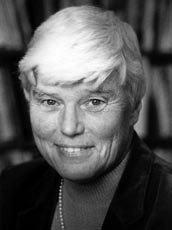 Dr. Ruth H. Young joined the faculty of the School of Social work soon after its founding in 1964. She was a graduate of Wellesley College and Catholic University of America and had served in the Navy’s Women Accepted for Volunteer Emergency Service (WAVES) before joining the faculty at the University of Maryland, Baltimore (UMB). During her 24 years of service at UMB she served as acting dean twice, once 1965 and again in 1976; founded an undergraduate social work program at the University of Maryland Baltimore County; and served as acting Vice President of Academic Affairs for the University of Maryland, College Park. Additionally, Dr. Young was named the first woman dean of the School of Social work in 1977. During her deanship, she promoted inter-professional education and worked hard to integrate the School of Social Work with the other professional schools in Baltimore. Dr. Young passed away in 2009, the Ruth H. Young Center on UMB’s campus is named in her honor.
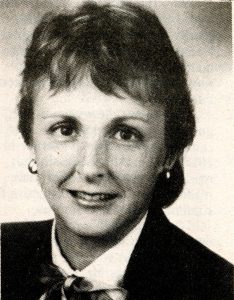 Barbara C. Hansen was named the first Vice Chancellor for Graduate Studies and Research soon after the merger of the University of Maryland, Baltimore and University of Maryland, Baltimore County graduate programs in 1985. In this role, Hansen reported to the chancellors at both schools; during her five-year tenure she grew enrollment and external funding in the graduate programs. In 1990 Dr. Hansen became director of the Obesity and Diabetes Research Center at UMB, a position that fit her research in obesity and diabetes. Hansen was a graduate of the University of California, Los Angeles and the University of Washington, Seattle and was a professor of Physiology at UMB’s School of Medicine. Dr. Hansen left the University of Maryland in 2005 for the University of South Florida.
 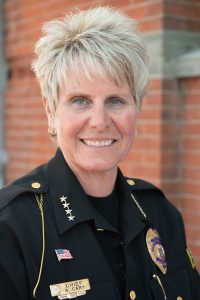 Chief Alice Cary joined the University of Maryland, Baltimore Police Department in June 2018 becoming the first woman police chief in the department’s 70-year history. Chief Cary started her career in Flint, Michigan and came to UMB from the University of Oregon. In Cary’s time at UMB, she has introduced new initiatives including police comfort dogs and the Community Outreach and Support Team (COAST), which received a Governor’s Award for Outstanding Proactive Crime Prevention in December 2019.