May 2026 – Volume 20 – Number 3

Dean’s Message

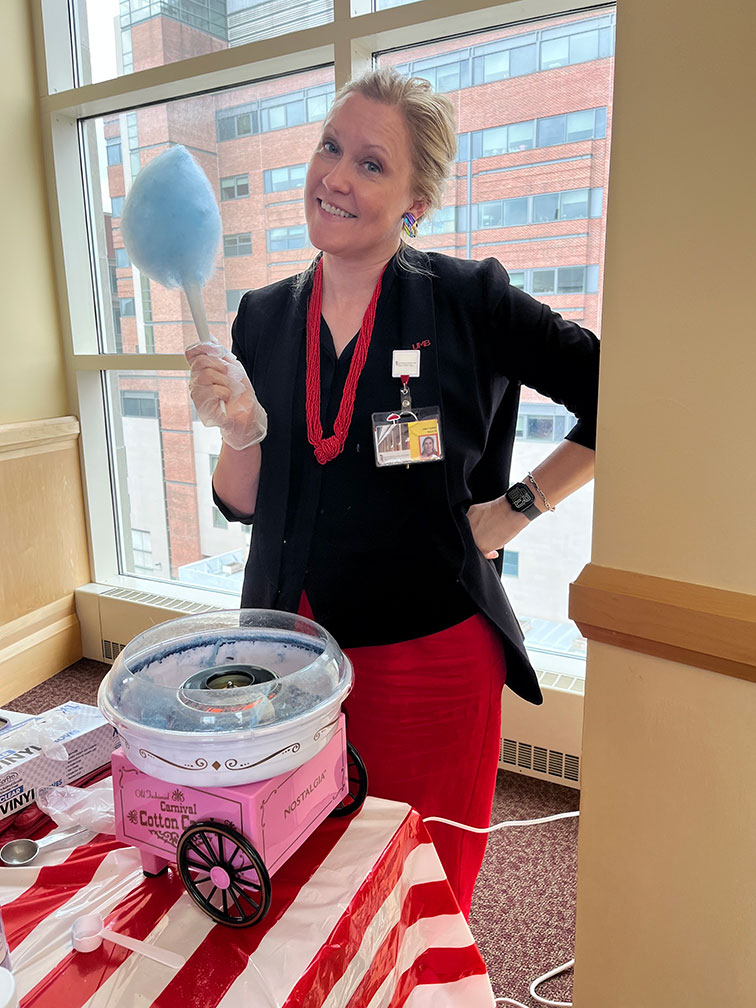
Emily Hurst holding blue cotton candy next to a pink cotton candy machine, with a brick building visible through the window.
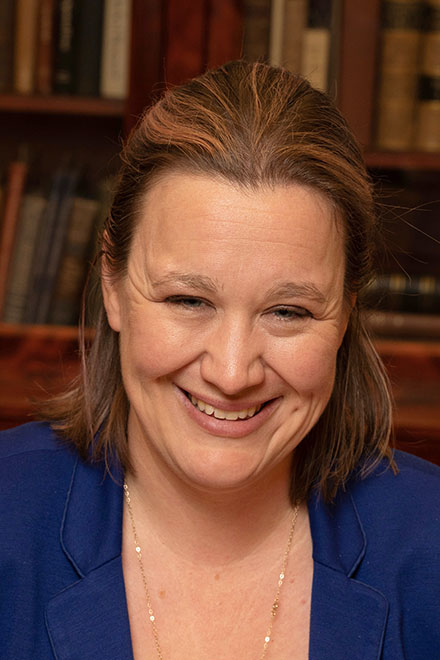
Emily Hurst, Associate Vice Provost and Dean, HSHSL

Moving into the summer months, this is one of the busiest times on campus. It has been a pleasure to see so many students in the library filling our spaces, preparing for exams and celebrating upcoming graduations with fun photos. I am happy that the University of Maryland, Baltimore (UMB) Health Sciences and Human Services Library (HSHSL) has been a constant for so many students over the years and proud of the role we play in supporting your success.

As graduation approaches, I know that many students will be moving on to begin their careers. I hope that the experiences you had on campus and at the HSHSL will bring you success. While access to UMB-licensed resources will change after graduation, I encourage you to stay connected to libraries and librarians wherever you go, as they remain valuable partners in your professional growth.

For students, faculty, and staff who are looking forward to vacation, I encourage you to explore the Kinnard Leisure Reading Collection for your next beach read or after-finals break. Lastly, as your careers advance, please consider opportunities to support the HSHSL by becoming a donor. With many options for giving, you can find the right one for you on our Give to the HSHSL page. Donors will receive a beautiful HSHSL calendar each year they contribute, along with invitations to upcoming happenings of interest, such as speaker events and gallery receptions.

Looking ahead, I am excited to share that right after finals the HSHSL will undergo some changes on the first floor. New carpeting will be installed, and some furnishings will be updated. Expect to see more open space and comfortable seating. A minor update to the Kinnard Leisure Reading area will improve its access and visibility. The iSpace footprint will shrink, but its services will remain intact behind the scenes. We will also move our printing and copy stations to make room for a family-friendly study room. Based on student feedback, we determined that a designated space where students can study with their children would offer much needed support to students balancing childcare with coursework.

I close this message with an update I had hoped I would not be making for many years. After careful consideration, I have recently accepted an opportunity to serve as the director of Library Services at the University of Texas Medical Branch (UTMB) beginning June 29. This was a very difficult decision, as I greatly value the time and relationships I have built at UMB. This new role will allow me to continue in health sciences library leadership while being closer to aging family members who need my support.

I have been in the Mid-Atlantic area for over a decade. During my time on the East Coast, I have been active with the Mid-Atlantic Chapter of the Medical Library Association (MAC/MLA). It was during my time in graduate school that I first became aware of the work of the librarians and staff at UMB, HSHSL. Over the years I had the chance to meet and work with many of the librarians from the HSHSL in different capacities. Former HSHSL leaders impacted my career and helped me understand how to bring dynamic ideas to life with the support of diverse perspectives. Former HSHSL leadership inspired me to become a library director, and serving as the dean at the HSHSL was a dream come true.

Over the past two and a half years, I had the great pleasure of working with the team at the HSHSL. Together we made many changes, and I am proud of all the things we accomplished. I know that the team at the HSHSL is strong and will be able to continue to support the vision of a collaborative library that is essential to the success of the university for years to come. I am very sad to leave, but I look forward to learning about the next new things that the future dean will bring to the HSHSL. Thank you for allowing me to be part of this group and your lives. It has made a lasting impact on me, and I am forever grateful for the opportunity. I am pleased to share that Alexa Mayo, assistant dean for Research and Information Services, will return to the role of interim dean upon my departure.

First Floor Recarpeting Begins May 18: What to Know

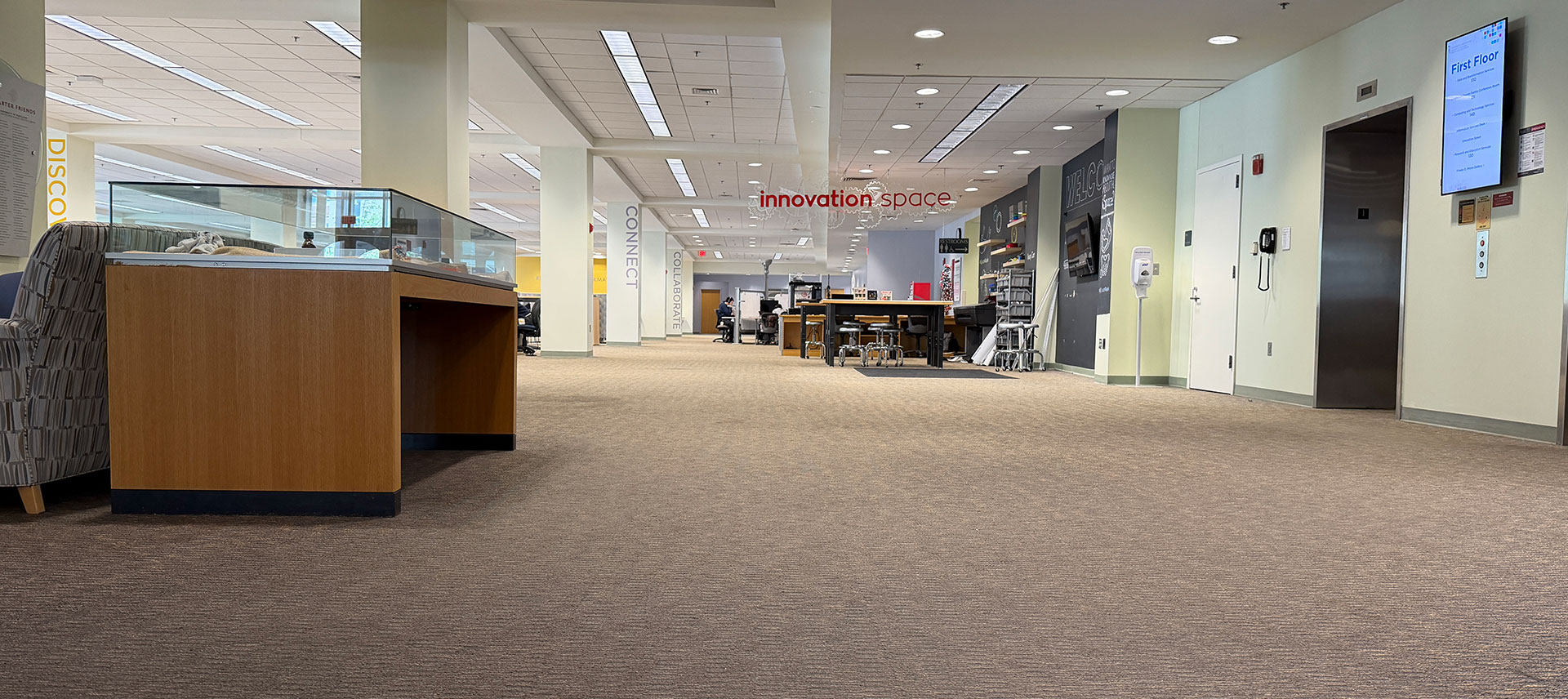
Interior of an academic workspace with carpeted floors, display case, worktables, and innovation space signage.

The HSHSL will begin a major first-floor recarpeting project on May 18. Work is expected to continue through June 15.

To prepare for construction, some first-floor services and amenities will begin relocating starting Thursday, May 14. During this transition period, the first floor will remain open, but visitors may notice temporary service changes as equipment and services move to other areas of the building.

Beginning May 18, the entire first floor will be closed to the public as carpeting is replaced in phases, starting in staff spaces and moving toward the library entrance.

How this may affect you

Library services

  • From May 18 to June 15, the library building will open at 8 a.m. Early morning access through the Campus Center between 6 and 8 a.m. will be unavailable during the project.
  • The Information Services desk will temporarily move to Room 201C on the second floor, directly above its usual location. Visitors may use the stairs or elevator to reach staff.
  • Poster printing services will continue from the temporary second-floor location.

Spaces and amenities

  • Printing and public computers are available on floors 2 and 4.
  • Seating and study space will be available on our upper floors.
  • Restrooms will remain open on all other floors, and a gender-neutral restroom is available in the Campus Center.
  • A clearly marked, accessible path from the building entrance to elevators and stairwells will remain open throughout the project.

Plan ahead

Directional signage will be posted throughout the building, and library staff will be available to help.

We appreciate your flexibility while we refresh the first floor and look forward to welcoming you back into the updated space soon.

Advice for New Grads

Graduates wearing black caps and gowns with yellow stoles seated in an auditorium.

Photo by Matthew D’Agostino / University of Maryland, Baltimore


The HSHSL sends its heartfelt congratulations to the graduating class of 2026! As you prepare to take on new challenges, we want to remind you of the support and resources available to you beyond graduation.

  • Paid Journals and Databases: Alumni can access HSHSL’s electronic resources off campus for 4 months after graduation. After that time, alumni are still welcome to visit the Library to use the resources onsite.
  • Free Journals and Databases: Once your electronic access expires, you will still have access to public databases for literature, drug information, and more. We have compiled a selection of these resources on our Open Access Resources for Health Sciences Research and Practice guide. Additionally, be sure to investigate what resources you have through your new workplace and any professional organizations of which you are a member.

The HSHSL wishes you all the best in your future endeavors! Please contact the Information Services Desk if you have any questions.

HSHSL Awarded Grant for Oral History Project

The Health Sciences and Human Services Library (HSHSL) is proud to announce that the University of Maryland, Baltimore (UMB) has selected “Preserving UMB Voices: A Community Driven Oral History Initiative” for full funding through the Access & Engagement Innovation Grant program. The project was awarded $7,000 to launch a new, Universitywide effort to document and preserve the lived experiences of UMB students, staff, faculty, and alumni.

Photo of Tara Wink
Tara Wink, MLS

Led by Tara Wink, MLS, Historical Collections librarian, and Dennis Nangle, MLS, assistant dean for Resource Development and Access, the initiative will create a sustainable infrastructure for collecting, preserving, and sharing oral histories across UMB. By elevating voices and stories that are not always visible in traditional institutional records, the project aims to broaden and strengthen the historical narrative of the University.

Reviewers praised the proposal for its strong interprofessional collaboration and its focus on centering community perspectives. The project brings together partners from several UMB schools, Student Affairs, the Thurgood Marshall Law Library, the Medical Alumni Association, as well as state-level partners at the Maryland State Archives and Digital Maryland.

Over the coming year, the Oral History Working Group will identify interviewees, develop shared guidelines and training, pilot interviews, and launch a publicly accessible digital collection. The grant will also support a student worker who will assist with logistics, transcription, and metadata creation.

By building the capacity for participatory archiving and fostering connections across units, “Preserving UMB Voices” directly supports the UMB Strategic Plan’s emphasis on belonging, engagement, and a thriving university culture. This initiative ensures that UMB’s living history, including its people, their experiences, and their contributions, will be preserved and shared for generations to come.

We look forward to sharing updates as this exciting project develops.

Early Summer Hours

Summer Hours

Temporary access update (May 18–June 15): Due to first-floor recarpeting, the library building will open at 8 a.m. Monday through Friday during this period. Early morning access through the Campus Center between 6 and 8 a.m. will be unavailable.


Regular Semester Hours

Monday – Thursday 8 a.m. – 8 p.m.
Friday 8 a.m. – 6 p.m.
Saturday 8 a.m. – 6 p.m.
Sunday Closed


Exceptions to Regular Hours

Memorial Day Weekend May 23 – 25 Closed
Juneteenth June 19 Closed
Independence Day Weekend July 3 – 5 Closed

NNLM Region 1 Funding Renewal and Upcoming Webinar

Stylized US map with NNLM and Network of the National Library of Medicine text.

The Network of the National Library of Medicine (NNLM) Region and the NNLM Web Services Office (NWSO), have received funding through an administrative supplement that extends our work through April 30, 2027. This continued support allows NNLM Region 1 to sustain and expand training, outreach, and engagement opportunities for members and vested partners across the region. The NNLM Web Services Office will also continue its critical role in supporting NNLM Regional Offices and Centers by maintaining essential web services and digital infrastructure for the network.

As part of this ongoing funding and our training initiatives, we invite you to join us for an upcoming webinar on May 28 at 1 p.m. EST.

Information Safety and Trust

This webinar will examine clinical and institutional definitions of patient safety, explore the critical relationship between safety, trust, and patient health behaviors, and introduce two models for understanding positive safety and information marginalization within healthcare settings.

We look forward to continuing our support of members and partners as we advance our shared work across NNLM Region 1 and the broader NNLM network!

Refreshing the Fifth Floor: A Progress Update on the Weeding Project

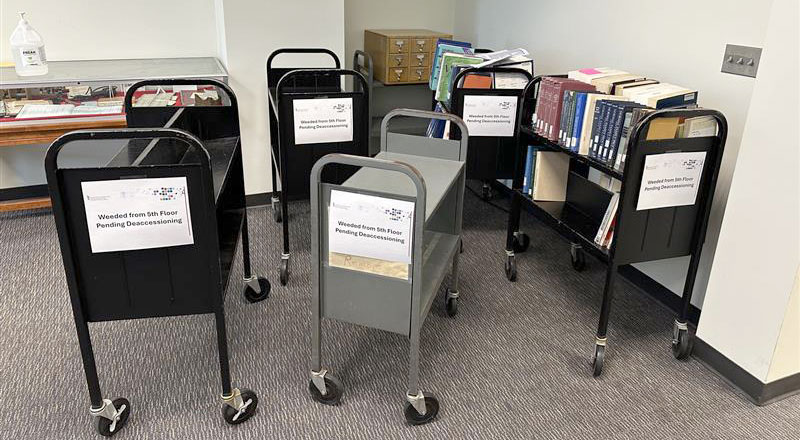
Several book carts with signs reading Weeded from 5th Floor Pending Deaccessioning are arranged in a library setting.

As the spring semester comes to a close and we celebrate the accomplishments of our graduates, the Health Sciences and Human Services Library continues behind‑the‑scenes work to ensure our physical collections are well aligned with current and future needs. One such effort, the fifth floor weeding and shifting project, is now well underway.

This project is part of HSHSL’s broader strategy to refresh the physical collection, improve discoverability, and make the stacks easier to navigate. Over the past several weeks, HSHSL librarians and staff have been carefully reviewing materials on the fifth floor, identifying items that are no longer a good fit for the active collection, and planning responsible next steps for retention, relocation, or withdrawal. As materials are withdrawn, remaining items are shifted and redistributed to create space and improve browsing.

If you’ve noticed shelves that look partially empty or “in transition,” that’s by design. These temporary gaps are a key part of the process, allowing the weeding team to accurately assess available space before final shifts are completed. We appreciate your patience (and your restraint!) in leaving shelves as‑is while this work continues.

One of the most rewarding aspects of this project is how collaborative it is. The effort brings together expertise from across HSHSL, including metadata management, collection analysis, stacks management, historical collections, facilities, and subject-matter expertise from the research and education librarians. This cross‑departmental approach ensures that decisions are thoughtful, data‑informed, and responsive to how our community uses the collection.

Importantly, access to materials remains available throughout the project. If you have difficulty locating an item or need assistance, HSHSL staff at the Information Services desk are always happy to help. While teams are mindful that the fifth floor is designated as a quiet space, some conversation is necessary to coordinate work. Ear plugs and headphones are available at the service desk, and floors three and four may offer quieter alternatives during active work periods.

Looking ahead, HSHSL plans to complete the first phase of this weeding project by the end of the summer. Once we reach this milestone, we will evaluate outcomes, plan next steps, and continue shaping a collection that is both welcoming and responsive to the evolving needs of our community.

Thank you for your patience and support as we invest in the long‑term stewardship of HSHSL’s collections.

Employee News

Hightlights

Dennis Nangle, MLS, was named as a co-editor of “Developments,” the newsletter for the Collection Development Caucus of the Medical Library Association.

April Wright, MLS, was elected to the Nominating Committee of the Medical Library Association for 2026-2027.


Publications

Emily Gorman, MLIS, Nicole Shelawala, M. Eng., MLIS, and Amy Yarnell, MLS, published “Building an interactive dashboard to visualize institutional open access publishing trends” in the Journal of the Medical Library Association (JMLA), Vol. 114, No. 2, April 2026.  https://doi.org/10.5195/jmla.2026.2340

Historical Collections Highlight: William Curtis’s Aloes

With the summer months approaching and the days getting warmer, sun exposure becomes more common. Even the most diligent will find themselves with a sunburn, and many will reach for aloe to help ease the sting of the burn. The medicinal use of aloe dates back to the fourth millennium BCE. An early record of aloe use dates to circa 2200 BC on a Sumerian hieroglyphic tablet depicting its use as a laxative. Today, aloe—most commonly Aloe vera (Aloe barbadensis Miller)— is still used to treat burns, cuts, and bites, as well as digestive problems.

The Genus Aloe

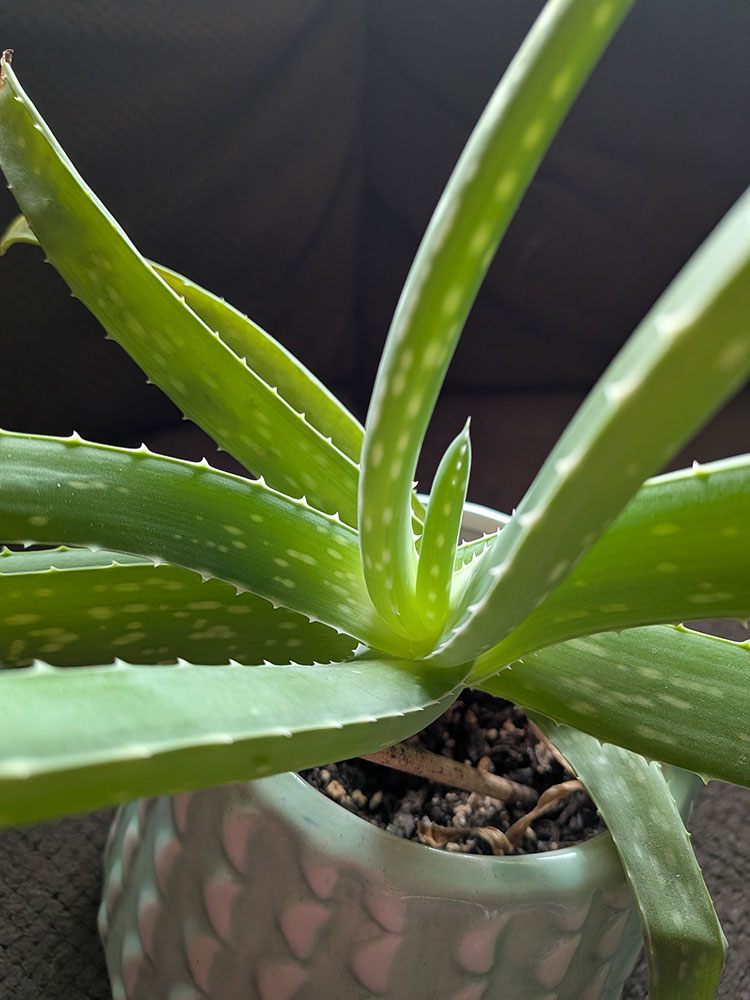
(Photograph) Photograph of a green aloe vera plant with thick, fleshy leaves featuring small white spots and serrated edges, growing in a textured light-colored pot filled with soil. The plant is positioned against a dark, blurred background, highlighting its vibrant color and healthy appearance.
Photograph of Aloe houseplant taken by Tara Wink, Historical Collections librarian. April 2026.

Aloe is a genus of succulent plants that contains over 650 species. Most species are native to southern and western Africa and islands in the Indian Ocean. Aloe plants thrive in regions with low rainfall and warm climates and do not tolerate cold weather, heavy frosts, or snowfall. While Aloe vera is the most well-known species for burn treatment, several other species of aloe have medicinal qualities that soothe burns and treat skin conditions. Aloe is also commonly used in cosmetics, skin care products, and soap. Some species have shown anticancer, antioxidant, antidiabetic, and antihyperlipidemic qualities in scientific studies, but findings remain inconclusive.

A common attribute of the Aloe species is a circular arrangement of thick, fleshy, and large green leaves with tubular yellow, orange, pink, or red flowers. Plants may grow at ground level or develop stems with a shrub-like appearance. Aloes are commonly cultivated in gardens, pots, and as houseplants.

William Curtis and his Botanical Magazine

Because of its medicinal qualities and stunning, unique flowers, the Aloe genus is commonly featured in historical botanicals, which were used to train early pharmacists in the use of plants for medicines, tonics, and tinctures. Historical Collections at the HSHSL holds issues of The Botanical Magazine, or, Flower-garden Displayed, an influential botanical journal created by William Curtis. First published in London in 1787, the journal continues today under the title Curtis’s Botanical Magazine, published by the Royal Botanic Gardens, Kew.

The first thirty issues featured copper engraved, hand-colored plates with descriptions of the plant’s history, physical characteristics, cultivation, and scientific classification. Curtis died in 1799, having completed 13 volumes; volume 15 began a new title, Curtis’s Botanical Magazine, which honored its founder. Volumes 1 through 146 (1787-1920) have been digitized through the Biodiversity Heritage Library.

William Curtis (1756-1799) was born in Alton Hampshire, England. He was a pharmacist who developed an interest and reputation for his work in botany and entomology. He was named director and instructor at the Chelsea Physic Garden from 1771 to 1777. The genus Curtisia was named in his honor.

Historical Collections received its holdings of The Botanical Magazine and Curtis’s Botanical Magazine from the estate of Dr. August Kach (Maryland College of Pharmacy Class of 1882). The Maryland College of Pharmacy, founded in 1841, was the predecessor to the University of Maryland School of Pharmacy. For over 50 years, Dr. Kach operated a drug store in Baltimore at Fort Avenue and William Street , where he collected over 700 volumes of influential pharmacy texts. His wife, Blanche A. Kach, donated his collection in 1941, forming a core component of the Pharmacy Collection.

The Aloe Species in Curtis’s Botanical Magazine

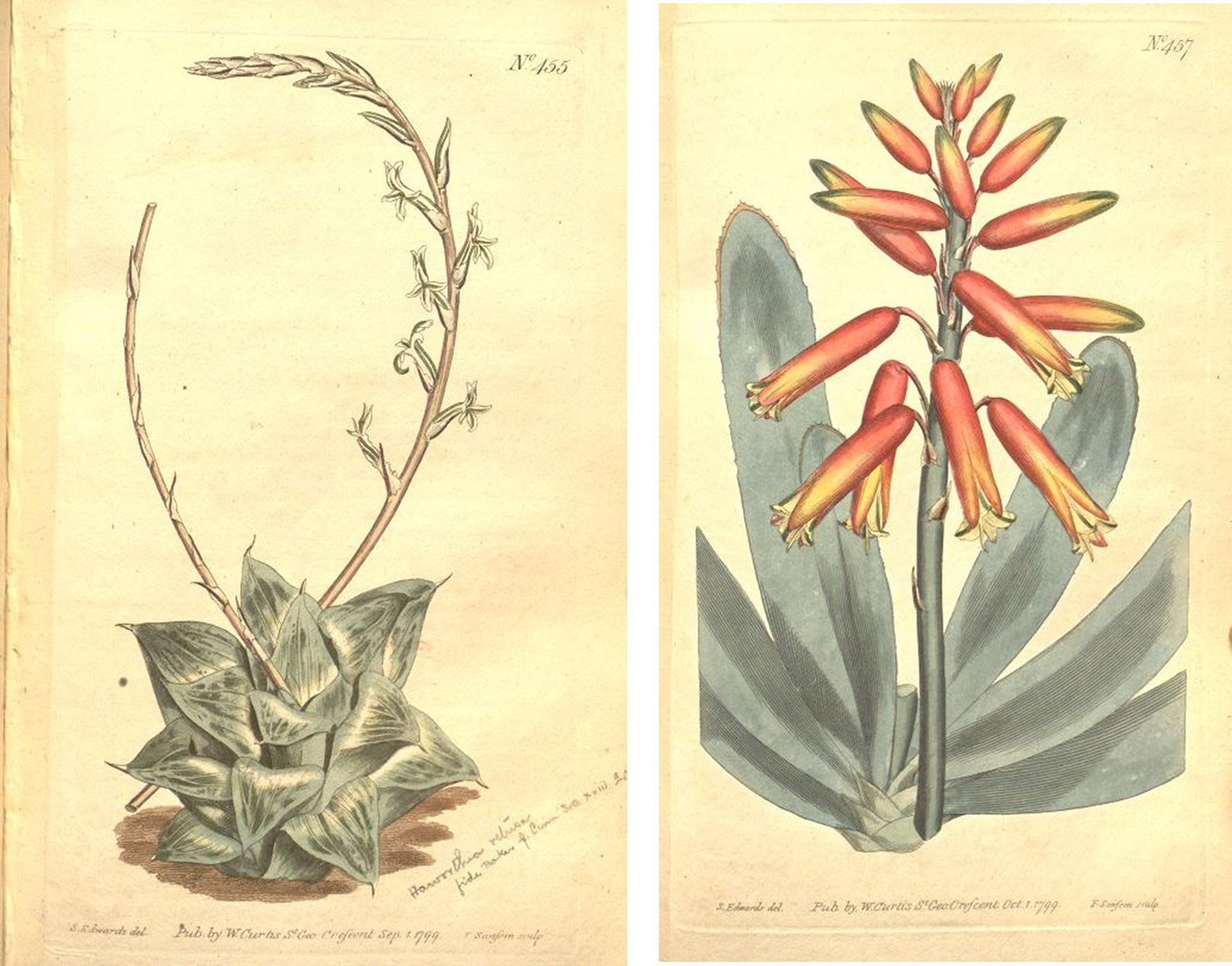
Botanical plates featuring aloe species appear throughout Curtis’s Botanical Magazine. Ironically, no depictions of the famous Aloe vera species were discovered in the journal while researching this article. The earliest images of aloe in The Botanical Magazine occur in Volume 13 (1799). They are Aloe retusa (plate 455) and Aloe plicatilis (plate 457); however, both were reclassified outside the Aloe genus as Haworthia retusa and Kumara plicatilis, respectively. Both have similar characteristics to those in the Aloe genus and have historically been used to treat skin burns and wounds.

(Nos 455 and 457) Two botanical plates from Curtis's Botanical Magazine. The left is a botanical illustration depicting a succulent plant with thick, pointed leaves arranged in a rosette and a tall, slender flowering stalk with small blossoms. The drawing includes handwritten notes indicating scientific documentation and classification from 1799. The right is a botanical illustration depicting a flowering plant with elongated, tubular orange and yellow flowers arranged along a central stalk and broad, gray-green leaves at the base. The artwork includes fine details such as shading and texture, with a small label, indicating a scientific or educational purpose.
Botanical Plates No. 455 and 457 from Curtis’s Botanical Magazine. Scans part of the Biodiversity Heritage Library, https://www.biodiversitylibrary.org/bibliography/307. Volume 13, 1799

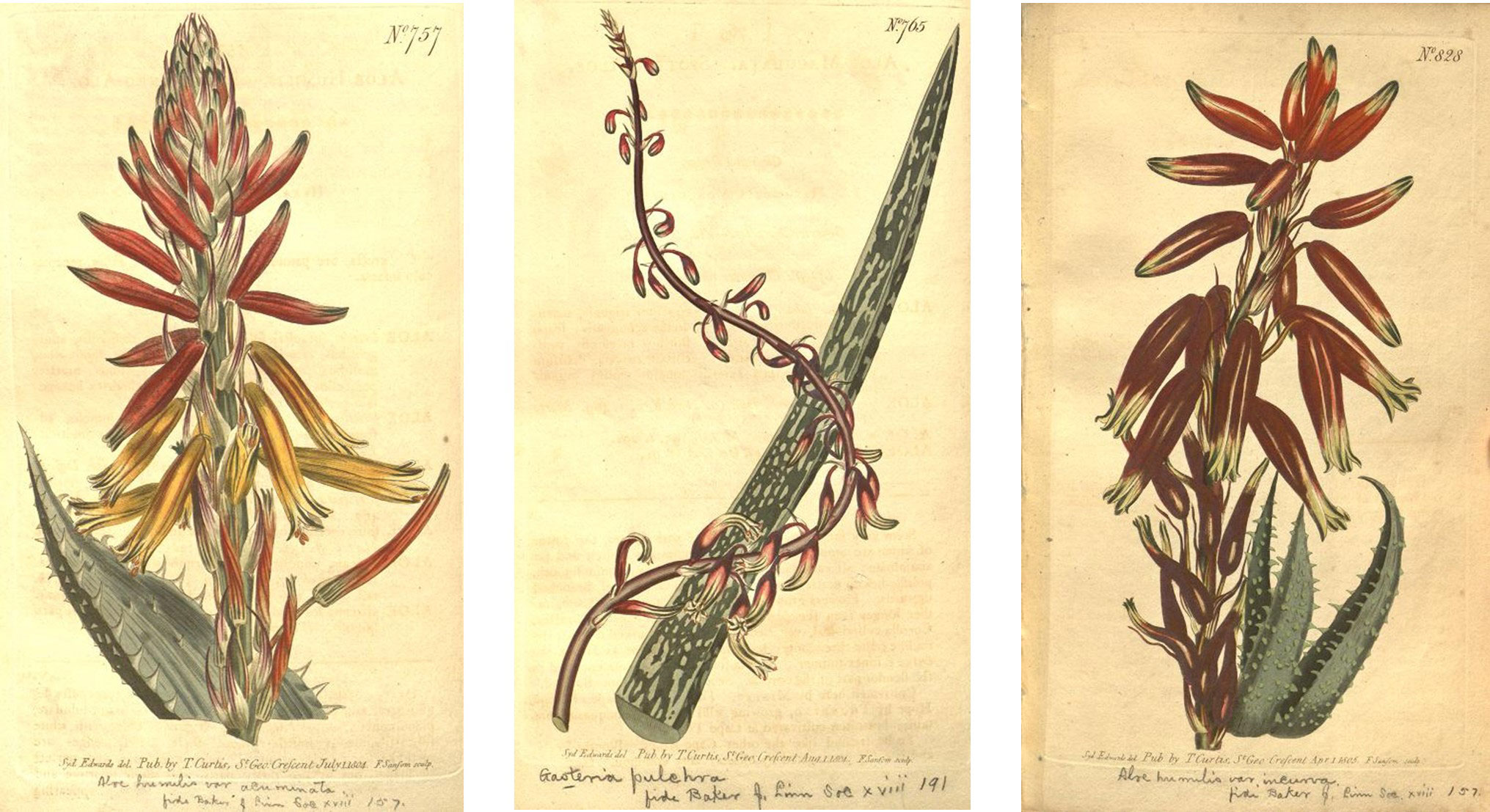
The earliest depictions that remain classified within the Aloe genus include Aloe humilis (plates 757 and 828) or “spider aloe” and Aloe maculata (plate 765) or “soap” or “zebra aloe”, published in Volumes 20 (1804) and 21 (1805). Spider aloe is reportedly as effective in treating sunburn as the more well-known Aloe vera. While, soap aloe, as the name suggests, is known to make soapy lather when mixed with water; it has demonstrated some antihistamine and anti-cancer properties in scientific studies.

(Nos 757, 765 and 828) Three botanical plates from Curtis's Botanical Magazine.  The left is Botanical illustration depicting a flowering aloe plant with a tall central stalk bearing red and yellow tubular flowers. The drawing highlights detailed spiky leaves at the base and includes handwritten scientific notes and numbering in the background. The middle is a botanical illustration depicting a long, pointed leaf with a climbing vine featuring small, curved flowers and buds. The artwork uses muted green and red tones, with detailed shading and labeling indicating scientific study of plant species. The right is a botanical illustration depicting Aloe humilis with elongated, tubular reddish-brown flowers and spiky green leaves. The illustration includes a label with scientific name and publication details, highlighting plant's structure and flower arrangement.
Botanical Plates No. 757, 765, and 828 from Curtis’s Botanical Magazine. Scans part of the Biodiversity Heritage Library, https://www.biodiversitylibrary.org/bibliography/307. Volumes 20-21, 1804-1805

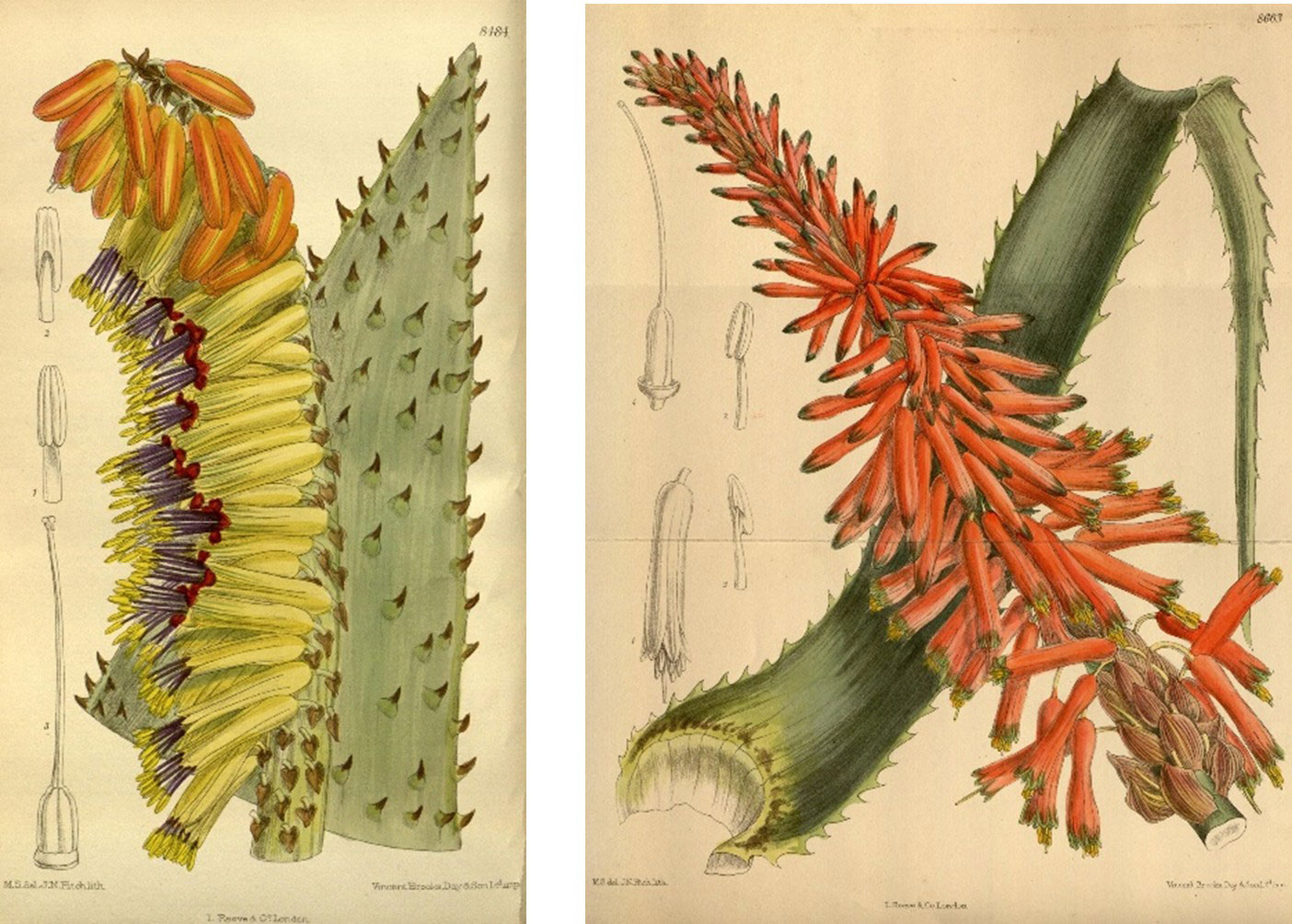
The final two Aloe illustrations in Historical Collection’s holdings of Curtis’s Botanical Magazine are Aloe marlothit (plate 8484) in Volume 139 (1913) and Aloe arborescens (plate 8663) in Volume 142 (1916). Aloe marlothit is known as “mountain aloe” and is a large plant with leaves growing as long as 5 feet. It can be used to promote skin health. Aloe arborescens or “candelabra aloe” can grow up to 10 feet tall. Studies have shown that candelabra aloe can help pain, allergies and asthma, fight infections and fugus, and may help fight cancer.

(Nos 8484 and 8663) Two botanical plates from Curtis's Botanical Magazine. Left botanical illustration depicting a detailed cross-section of a flowering succulent plant with spiky green leaves and clusters of tubular flowers in orange, yellow, and purple hues. Includes labeled diagrams of flower parts on a beige background, highlighting structural components and reproductive features for scientific study. Right botanical illustration depicting a flowering aloe plant with a large green spiky leaf and a dense cluster of tubular red-orange flowers. Detailed sketches of flower parts are shown on the left side, highlighting botanical structure and morphology.
Botanical Plates No. 8484 and 8663 from Curtis’s Botanical Magazine. Scans part of the Biodiversity Heritage Library, https://www.biodiversitylibrary.org/bibliography/307 . Volume 139, 1913, and Volume 142, 1916.

As summer approaches and aloe remains a common remedy for sunburn, these plants reflect a long history of medicinal use documented through centuries of botanical scholarship. Beyond Curtis’s Botanical Magazine, the Historical Collections houses numerous botanical works, including volumes from Dr. Kach’s estate. For additional information or to view these materials, please contact the Historical Collections Librarian and Archivist, Tara Wink.


Comments are closed.

The Archives
Subscribe via E-mail

Enter your e-mail address and be notified when a new issue is released!


We currently have email subscribers!